Seal Watching at Island Beach State Park: A Winter Guide From Seaside Park
By Jason Tarabokija, licensed New Jersey real estate salesperson with New Jersey Elite Group, LLC. ·
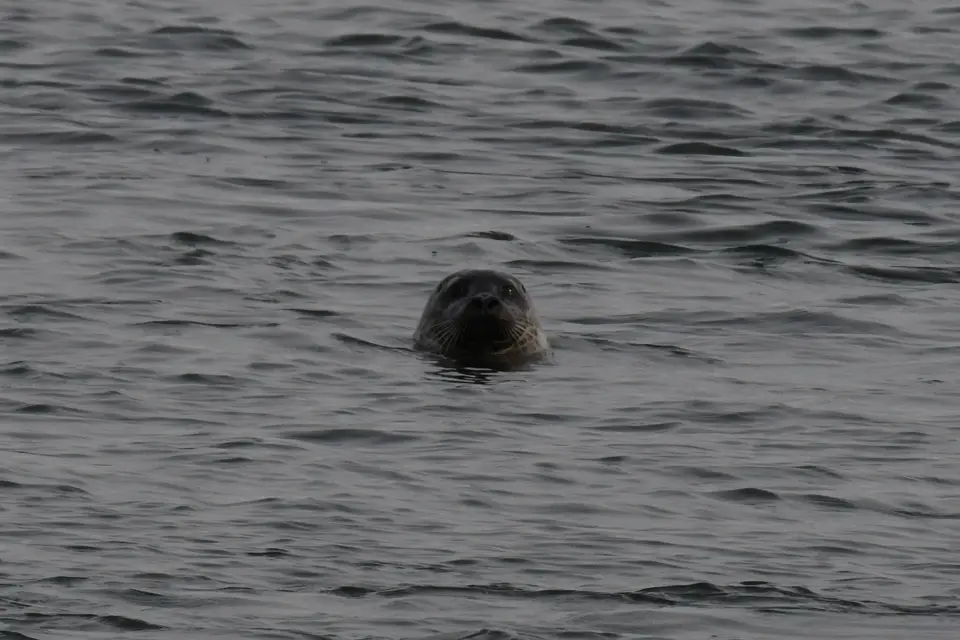 Harbor seal at Barnegat Lighthouse State Park, across the inlet from Island Beach, March 2022. Photo: lwolfartist, CC BY 2.0, via Wikimedia Commons, cropped.
Most people leave the Jersey Shore when the boardwalk closes, which is exactly when the seals show up. This seal watching Island Beach State Park guide is written from Seaside Park, where Central Avenue runs straight to the park gate, so a cold morning on the bay side can start a few minutes after your coffee.
The short answer: seals visit New Jersey from late fall through early spring, and one local seal guide puts the season at roughly December through April. At Island Beach State Park, people look on the bay side marshes, toward the Sedge Islands and near Barnegat Inlet. Go near low tide, bring binoculars and stay at least 150 feet away.
Keep dogs on a leash, and call the Marine Mammal Stranding Center at (609) 266-0538 if a seal looks sick or hurt. Sources for each point are linked below.
This guide covers when to go, where in the park people look, what to pack, the distance guideline and dog rules, and who to call. If you want the summer side of the park (swimming areas, trails, fishing and kayaking), read our guide to visiting Island Beach State Park from Seaside Park. This one is just about seals.
When Is Seal Season at Island Beach State Park?
The New Jersey Division of Fish and Wildlife says seals are a seasonal presence along the coast, commonly seen from late fall through early spring. The Jersey Shore Guide's seal page narrows that to December through April, with February and March as the peak months and numbers dropping off by mid April.
Harbor seals are the ones you are most likely to see. Save Coastal Wildlife estimates that about 95 percent of seals observed in New Jersey are harbor seals. The state lists gray seals and harp seals as the other two species most often seen here.
Seals are not on a schedule, so treat the season as a window, not a promise. By that guide's month by month calendar, January through March is the most reliable stretch, and late April is a bonus if one is still around.
Where to Look for Seals Inside the Park
Island Beach is a narrow, 10 mile barrier island between the Atlantic and Barnegat Bay, according to the official NJ State Parks page. Reports of seals in and around the park point to two areas: the bay side and the inlet at the far southern end.
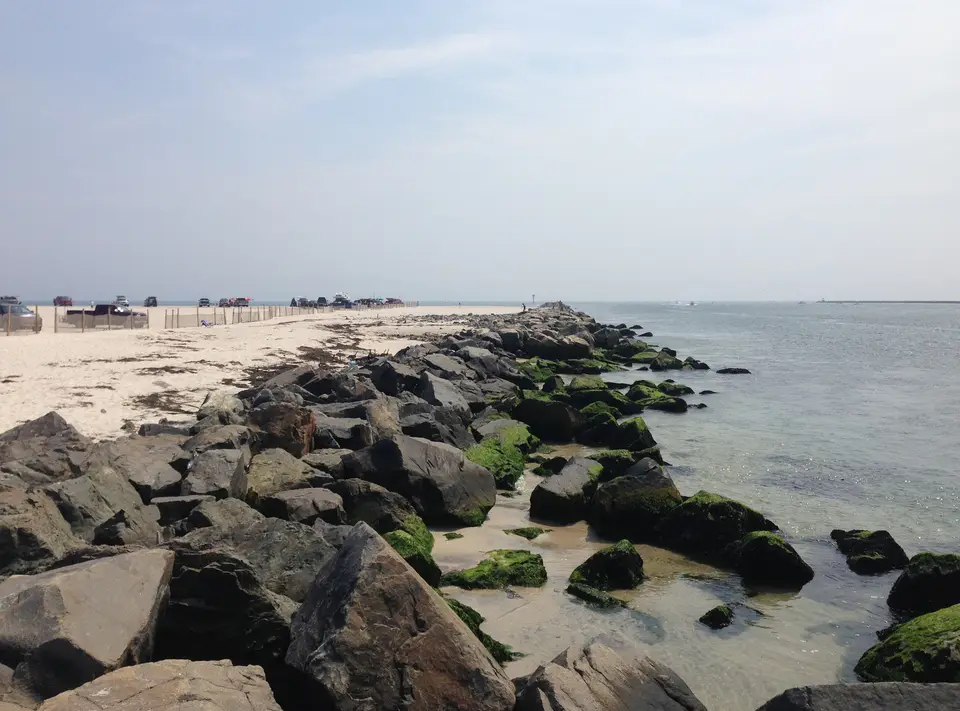 The north jetty at Barnegat Inlet, Island Beach State Park, in August 2013. Photo: Famartin, CC BY-SA 3.0, via Wikimedia Commons.
- The bay side marshes. A New Jersey DEP feature on the park mentions visitors catching a glimpse of seals basking on marshy hummocks during naturalist hikes. The Spizzle Creek Bird Observation Blind sits on the bay side between Parking Areas 19 and 20, per Island Beach Nature Programs, and gives you a sheltered spot to scan the marsh with binoculars. For more on the town itself, see our guide to quiet Seaside Park getaways.
- The Sedge Islands. In 2016 an angler filmed nearly two dozen seals resting on an island in the Sedge Islands off the park, WHYY reported. The Sedge Islands Marine Conservation Zone is reached by canoe or kayak, so from land you are looking across the water, which is where good optics earn their keep.
- Barnegat Inlet. The park road runs south toward the inlet, and the north jetty there is a well known fishing spot, per the state park page. WHYY has also reported a seal resting near the Barnegat Inlet jetty inside the park. The jetty rocks get slick in winter, so view from solid footing.
If you want a guided start, check the Island Beach Nature Programs event calendar before your trip. Programs change by season, and the calendar is the place to see what is running.
Go at Low Tide
Seals often haul out at low tide, when sandbars, marsh edges and rocks are exposed, according to Save Coastal Wildlife. The Jersey Shore Guide suggests arriving one to two hours before low tide so you are set up while they come out.
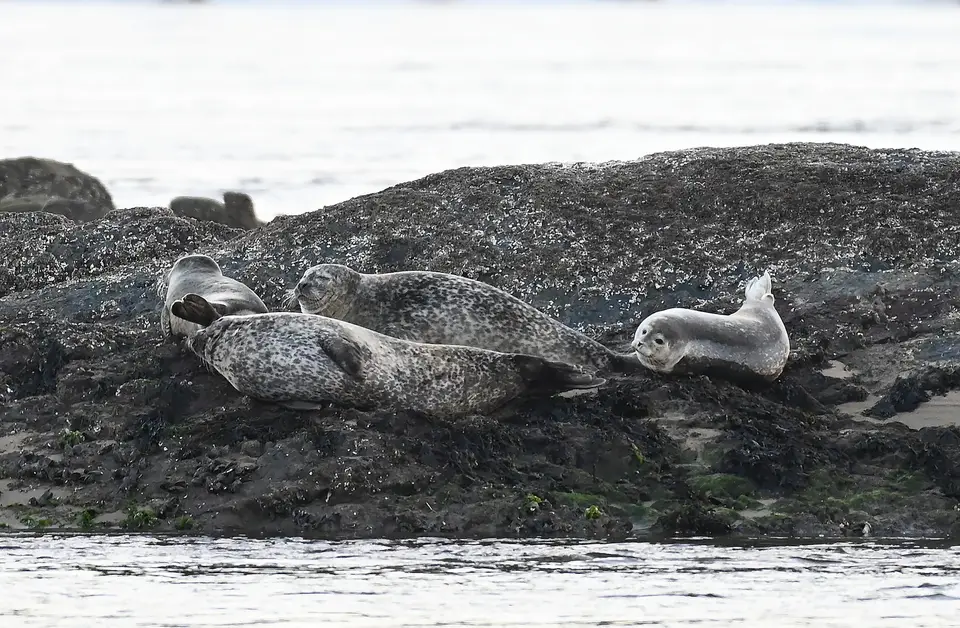 Harbor seals hauled out at low tide at Parker River National Wildlife Refuge, Massachusetts, January 2021. Photo: U.S. Fish and Wildlife Service Northeast Region, Public domain, via Wikimedia Commons.
Tide times shift every day, so look them up the night before. NOAA publishes free predictions for stations right in the park, including Island Beach, Sedge Islands and Barnegat Inlet, USCG Station. Pick the station closest to where you plan to look, since the predicted times differ from station to station.
Plan around daylight, too. The official park page lists the gate as open dawn to dusk daily, and winter dusk comes early.
What to Bring for a Winter Seal Walk
A seal at 150 feet looks like a gray rock without help. Pack for distance and for wind off the bay.
- Binoculars or a spotting scope. Save Coastal Wildlife recommends them so you get a good view without moving closer.
- A telephoto lens if you want photos. NOAA Fisheries suggests binoculars or telephoto lenses instead of getting near the animals.
- Warm, windproof layers. The Jersey Shore Guide calls out cold wind as the main challenge and recommends windproof outer layers. Add a hat, gloves and boots you do not mind getting sandy.
- The gate fee. The state park page lists an off-season daily fee of $5 for New Jersey residents and $10 for non-residents.
- A tide time and a plan B. If the seals are not out, the park's bay side trails and the ocean beach are still worth the stroll.
Check the alerts on the park page before you leave the house. As of November 2026 it notes that the Fisherman's Walkway restrooms (A6/7) are closed for repairs, with restrooms still open at the swimming area pavilion and at A13, A19 and A21.
The 150 Foot Guideline and Why It Matters
Stay at least 150 feet (50 yards) from any seal, on land or in the water. That is the distance NOAA Fisheries' guidelines for New England and the Mid-Atlantic give for seals, and it is what the Marine Mammal Stranding Center asks of anyone who finds a seal on the beach.
The legal part is simple. Seals are protected by state and federal law, and MMSC says it is illegal to approach or touch one. Under the federal Marine Mammal Protection Act, feeding or harassing marine mammals in the wild is illegal, and NOAA notes that if your behavior changes the animal's behavior, it may count as harassment.
A seal on the sand is usually resting, not stranded. NOAA's Share the Shore page lists the signs that you are too close: the seal starts looking at you, vocalizing, moving away, waving flippers or yawning more. If you see any of that, back up. Never try to push a seal back into the water.
Bringing Your Dog
Dogs are welcome in Island Beach State Park, but the park rules say pets must be on a leash no longer than six feet and under the owner's control. Dogs are not allowed on the Spizzle Creek Bird Blind Trail at any time, so pick a different viewing spot when the dog is with you.
Around seals, give dogs even more room. MMSC asks people to keep dogs away from seals because they will scare them and can pick up diseases the seal is carrying, and NOAA notes that seals have large canine teeth and will bite if threatened. For more on where dogs can go along the coast, see our dog-friendly Jersey Shore beaches guide.
Who to Call About a Stranded or Injured Seal
Save these two numbers in your phone before you go.
- Marine Mammal Stranding Center, 24-hour hotline: (609) 266-0538. Listed on the MMSC website and on the NJ Fish and Wildlife marine mammals page. MMSC says to call rather than message it on social media or by email, since those are not monitored around the clock.
- Island Beach State Park office: 732-793-0506. Listed on the official park page, which gives office hours of 8:30 a.m. to 4:30 p.m. daily. The park's nature programs FAQ says that if you see a marine mammal at the park, call MMSC directly or call the park office.
When you call, stay back at least 150 feet and keep other people and dogs back too. Note where the seal is (a parking area number helps) and what you see, then let the trained responders decide what happens next.
Make It a Winter Weekend in Seaside Park
Seal watching works best when you can go on the tide, not on the drive. Staying close lets you check the tide chart at breakfast and be on the bay side when the water drops, then come back to a warm house instead of a long ride home.
Breezy's Seaside Park vacation rentals sit along Central Avenue, the road that ends at the park entrance, and several of them accept pets, so check each listing's pet policy if your dog is coming. If you want a bit more going on in the evening, our Seaside Heights vacation rentals are just to the north. For what a cold-weather stay at the Shore is really like, read our off-season guide to fall, winter and monthly rentals.
Frequently Asked Questions
When is the best time for seal watching at Island Beach State Park?
Go between late fall and early spring; one local guide puts the best stretch at roughly December through April. Plan your visit near low tide. New Jersey's Division of Fish and Wildlife says seals are commonly seen from late fall through early spring, and the Jersey Shore Guide names February and March as peak months.
Where in Island Beach State Park can you see seals?
Reports point to the bay side marshes, the Sedge Islands (seen across the water from land) and the Barnegat Inlet jetty at the park's southern end. Seals are not a promise at any spot, so bring binoculars and go near low tide.
How close can I get to a seal?
No closer than 150 feet. That is the distance NOAA Fisheries' guidelines and the Marine Mammal Stranding Center both use. Under the federal Marine Mammal Protection Act, feeding, touching or harassing a seal is illegal.
Can I bring my dog to Island Beach State Park to see seals?
Yes, on a leash no longer than six feet. Keep the dog well away from any seal, and note that dogs are not allowed on the Spizzle Creek Bird Blind Trail.
What should I do if I find a seal on the beach?
Stay back at least 150 feet and call the Marine Mammal Stranding Center at (609) 266-0538. Most seals on the sand are resting, so do not try to move it or put it back in the water.
Is Island Beach State Park open in winter?
Yes. The official park page lists the gate as open dawn to dusk daily, with an off-season daily fee of $5 for New Jersey residents and $10 for non-residents.
Book Your Stay
Pick a winter weekend, check the tide chart and give yourself the easy version of seal season: a short drive down Central Avenue and a warm house waiting when you get back. Browse our Seaside Park vacation rentals or our Seaside Heights vacation rentals. The primary renter must be 25 or older.
Sources
- Marine Mammal Stranding Center, home page (24-hour hotline): mmsc.org
- Marine Mammal Stranding Center, FAQs (150 feet, dogs, legal status): mmsc.org/faqs
- NJ State Parks, Island Beach State Park (phone, hours, fees, pet rule, alerts, Sedge Islands, inlet jetty): dep.nj.gov
- NJ Division of Fish and Wildlife, Marine Mammals of New Jersey (season, species, 150 feet, MMSC hotline): dep.nj.gov/njfw
- Island Beach Nature Programs, FAQs (park office, marine mammal reporting, dog rules): islandbeachnatureprograms.org/faqs
- Island Beach Nature Programs, About Us (Spizzle Creek blind location): islandbeachnatureprograms.org/about
- Island Beach Nature Programs, Events: islandbeachnatureprograms.org/events
- NJDEP, Island Beach State Park feature (seals on marsh hummocks): nj.gov/dep/daw/islandbeach
- NOAA Fisheries, Wildlife Viewing in New England and the Mid-Atlantic (150 feet): fisheries.noaa.gov
- NOAA Fisheries, Share the Shore with Seals (signs of disturbance, dogs, teeth): fisheries.noaa.gov
- NOAA Fisheries, Feeding or Harassing Marine Mammals in the Wild (MMPA, binoculars and lenses): fisheries.noaa.gov
- NOAA Tides and Currents, Island Beach, Sedge Islands (8533535): tidesandcurrents.noaa.gov
- NOAA Tides and Currents, Barnegat Inlet, USCG Station (8533615): tidesandcurrents.noaa.gov
- Save Coastal Wildlife, Seals of the Jersey Shore (95 percent harbor seals, low tide, binoculars): savecoastalwildlife.org
- Jersey Shore Guide, Seal Watching at the Jersey Shore (December to April, peak months, arrive before low tide, windproof layers): shore-guide.com
- WHYY, Video: Barnegat Bay seals (Jan. 12, 2016): whyy.org
- WHYY, Seal hangs with fishermen in Island Beach State Park (Aug. 26, 2013): whyy.org
- Breezy Beach Stays, Seaside Park area page (Central Avenue location, pets accepted at several homes): breezybeachstays.com
Looking for a place to stay? See our Seaside Park vacation rentals.